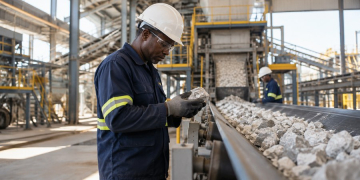
Few countries are as synonymous with mining as South Africa. From the world’s deepest gold mines to vast platinum reserves, mining has long been the bedrock of the nation’s economy, society, and industrial development.
Today, even as the sector grapples with shifting global dynamics, environmental pressures, and structural challenges, mining in South Africa continues to reinvent itself—emerging as a critical player in the global energy transition and a pillar of economic resilience.
Gold and Platinum: Enduring Giants
South Africa remains one of the world’s largest producers of gold, platinum group metals (PGMs), and diamonds, with gold once forming the spine of the Johannesburg economy. While total output has declined over the decades due to ore depletion and high production costs, recent market trends have injected new life into the industry.
In August 2025, Gold Fields—a major South African mining firm—announced a more than threefold increase in profits, buoyed by record bullion prices and improved operational efficiency. The company raised its interim dividend by over 130%, underscoring investor confidence and the enduring relevance of gold exports in a volatile global economy. This reflects a broader trend: in times of economic uncertainty, South Africa’s gold sector still delivers value.
Critical Minerals and the Green Economy
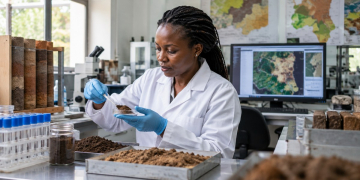
Beyond gold and platinum, South Africa is increasingly positioning itself as a hub for critical minerals—such as manganese, vanadium, chromium, and rare earth elements—all of which are essential for electric vehicles, battery storage, and renewable energy infrastructure.
As Western economies scramble to diversify away from Chinese supply chains, South Africa’s rich geology and relatively advanced infrastructure offer a compelling alternative. There is growing interest from global investors and governments in co-developing local processing capacity and value-added beneficiation—transforming the country from a raw exporter into a green-industrial base.
Innovation and Sustainability in the Deep Mines
South Africa is home to some of the deepest and most challenging mines in the world. Companies are now turning to automation, AI-driven exploration, and smart mining systems to enhance safety, lower costs, and increase efficiency.
Moreover, there is a decisive shift toward environmental, social, and governance (ESG) compliance. This includes renewable energy integration at mine sites, improved water management, community development programmes, and more stringent health and safety regulations. The government, in partnership with industry bodies like the Minerals Council South Africa, is pushing for a modernised, more sustainable mining sector that aligns with international best practices.
Challenges Remain—but So Does Opportunity
Despite its resilience, mining in South Africa faces persistent headwinds: unreliable power supply from Eskom, labour unrest, policy uncertainty, and global price fluctuations. Load-shedding in particular has forced mining firms to curtail operations and invest heavily in alternative energy sources—many of them solar and battery-based solutions.
Nonetheless, the sector remains one of the largest employers, particularly in rural areas, and a key contributor to export earnings and government revenue. Mining also supports auxiliary industries such as logistics, engineering, and manufacturing.
As global economies accelerate their green transitions, South Africa’s mining sector is well positioned to supply the world with the minerals of the future. With the right investments, policy frameworks, and public–private partnerships, the sector can continue to generate inclusive economic growth while adapting to a low-carbon future.
From the depths of its gold shafts to the surface of its solar-powered mines, mining in South Africa remains a story of evolution—deeply rooted in history, yet increasingly defined by innovation and sustainability.