Africa’s energy story is often framed around national grids, utility reforms and billion-dollar generation projects. Yet in many of the continent’s fastest-growing cities, the real electricity system is not the one shown in policy documents.
It is the one humming behind shopping centres, offices, hospitals, telecom towers and middle-class homes — powered by diesel generators, inverters, batteries and informal mini-grids.
This parallel system has become so widespread that it now functions as an economy in its own right. Call it Africa’s “generator economy”: a shadow infrastructure market built to compensate for unreliable grid supply, and increasingly central to how urban Africa operates.
A market built on reliability, not ideology
In energy terms, Africa is not facing a single crisis. It is facing a reliability crisis. Even where national grids expand access, stability often lags. Load shedding, voltage drops, delayed connections and seasonal generation constraints push households and businesses into self-provision.
The response has been intensely market-driven. Diesel gensets remain the backbone of emergency power for commercial operations. Inverters and battery systems have become the consumer solution for apartments and SMEs. Meanwhile, informal mini-grids and community power schemes are quietly filling gaps across peri-urban zones.
The point is not that Africa lacks electricity. The point is that Africa cannot always depend on it.
The FX leak: power insecurity drives dollar demand
The generator economy is also a foreign exchange story. Diesel fuel imports, spare parts, lubricants, batteries, solar components and power electronics are frequently priced in dollars and sourced through international supply chains. Every generator purchased is not just capex; it is a recurring FX commitment.
In countries facing currency pressure, this becomes a feedback loop. Weak FX raises the cost of fuel and equipment, which raises operating costs and inflation, which then increases stress on the grid and the economy. The generator economy becomes both a symptom and an amplifier of macro imbalance.
A silent engine of SME growth
Yet the generator economy is not only a cost. It is also a livelihoods market.
Across Africa’s cities, it sustains thousands of SMEs: electricians, inverter technicians, battery resellers, fuel distributors, maintenance crews, cable suppliers, solar installers, and logistics operators. These are the businesses keeping the lights on — often with higher margins than conventional retail because reliability has scarcity value.
In many markets, the energy entrepreneur has become as important as the informal trader. The generator economy is quietly building a new class of skilled urban service providers.
The competitiveness penalty
At the national level, the generator economy is expensive. Diesel-based generation is significantly costlier than grid-scale supply and undermines industrial competitiveness. Firms must price in energy redundancy. That distorts investment decisions, discourages long-horizon manufacturing, and reduces productivity.
For multinationals, it becomes a due diligence item. Energy reliability shapes site selection, operating costs and risk premiums. In sectors like cold chains, agribusiness processing, telecoms and data services, power uncertainty translates directly into business fragility.
Where this is heading: from generators to hybrid systems
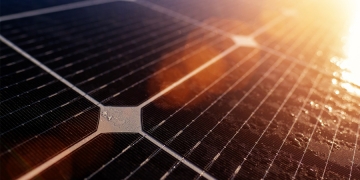
The market is already evolving. Many companies are shifting from diesel-only reliance to hybrid configurations: solar plus storage, smart inverters, battery optimisation and generator “last resort” backup. The short-term logic is cost. The long-term logic is resilience.
This transition is happening from the bottom up, driven by economics rather than policy. But it signals a deeper truth: Africa’s future energy system may be shaped as much by decentralised investment as by national utility plans.
Why the generator economy matters
Africa’s generator economy is the continent’s hidden energy market — large, profitable, FX-intensive, and central to urban resilience. It reflects the cost of unreliable power, but also the ingenuity of a private sector that refuses to stop working.
For policymakers, the lesson is uncomfortable but valuable: every generator sold is both a private solution and a public signal. It indicates demand for electricity, yes — but more importantly, it indicates demand for reliability.
If Africa can close the reliability gap, it will not only reduce diesel dependence. It will unlock productivity, lower inflation pressure, and convert today’s shadow infrastructure into formal, scalable energy markets.