The meeting comes as Ethiopia signals further economic reforms. It seeks to turn those signals into bankable opportunities for foreign investors, including US firms looking for clearer rules and faster implementation.
Commercial diplomacy moves from rhetoric to execution
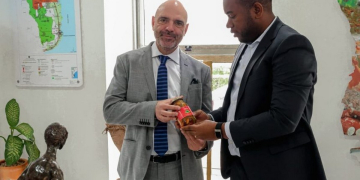
The Public-Private Dialogue (PPD) took place on 23 July 2026 at the Skylight Hotel in Addis Ababa. It brought together senior Ethiopian officials, US diplomats, American investors, and representatives of the American Chamber of Commerce in Ethiopia. The forum was jointly convened by the Ethiopian Investment Commission (EIC), the US Embassy in Ethiopia, and the Ethiopian-American Chamber of Commerce. Ambassador Girma Birru, Chairperson of the Ethiopian Investment Board, led proceedings.
US Ambassador Ervin J. Massinga co-chaired the session alongside EIC Commissioner Dr Zeleke Temesgen and Ambassador Girma Birru, who also serves as Chief Macroeconomic Advisor to the Prime Minister. Discussions centred on advancing commercial diplomacy, expanding market access, and ensuring a more open, transparent, and level playing field for US companies in Ethiopia.
Commissioner Zeleke underscored that laws and regulations alone cannot deliver a predictable investment climate. He argued that sustained, transparent dialogue between policymakers and the private sector is essential. It helps identify barriers, develop practical solutions, and build investor confidence. Over the past two years, the EIC has used PPD platforms with investor associations to support a more transparent and predictable environment. This gives foreign investors direct channels to engage line ministries and agencies.
Ambassador Massinga reaffirmed Ethiopia’s strategic importance to Washington and welcomed ongoing economic and investment reforms. He stressed that an open and predictable business setting is critical to unlock greater US capital and support private-sector-led growth. The US Embassy framed the event as part of a broader effort. The goal is to translate high-level diplomatic commitments into concrete commercial opportunities for US and Ethiopian businesses.
Targeted action on bottlenecks and market access
Discussions at the Skylight Hotel focused on market access, regulatory challenges, and the conditions needed to scale private-sector investment. Ambassador Massinga urged the EIC and private-sector representatives to develop a targeted action plan. The plan would address key bottlenecks identified by US and Ethiopian businesses, signalling a shift from dialogue to implementation.
Senior officials from the Ministry of Finance, the Ministry of Trade and Regional Integration, the Ministry of Revenues, the Ministry of Transport and Logistics, the Ethiopian Customs Commission, and the Immigration and Citizenship Service engaged directly with investor concerns. More than 50 members of the American Chamber of Commerce in Ethiopia and representatives of development partners attended. This gave the forum a wide base across sectors and institutions.
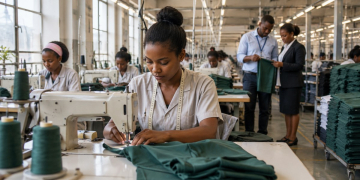
The dialogue builds on Ethiopia’s recent steps to open key trading sectors to foreign investors. This includes the 2025 directive that allowed foreign participation in export, import, wholesale, and retail trade under defined capital and due-diligence conditions. Retail participation marks the first such opening in decades. These moves, alongside wider reform signals highlighted by Ethiopian officials and the US Embassy, position Ethiopia US investment engagement as a central pillar of the country’s growth strategy.
For investors, the key takeaway is that both governments are now explicitly tying commercial diplomacy to specific regulatory and operational fixes. As Ethiopia develops the proposed action plan and continues reform of trade, finance, and capital-market rules, institutional investors will watch whether bottlenecks ease in practice and whether Ethiopia US investment flows start to reflect the stronger policy dialogue.