By Mamadou Biteye and Amit Kapoor
On 4 September 2026, Somalia deposited its instrument of ratification, becoming the 50th State Party to the African Continental Free Trade Area. Negotiations on rules of origin, stalled for years over textiles, apparel and automobiles, are now complete. The Pan-African Payment and Settlement System links 28 countries. On paper, the architecture of a single African market is almost in place.
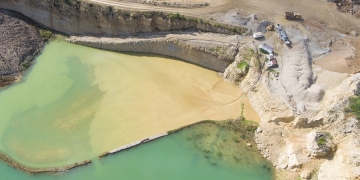
Yet Africa’s share of global merchandise exports has not exceeded 3% since 2014. Primary goods still make up more than three-quarters of what the continent sells abroad. The continent supplies roughly 70% of the world’s cobalt and 75% of its manganese but captures less than 1% of the value created by manufacturing the clean-energy technologies built from them.
Why do agreements multiply while outcomes barely move? The third edition of the Africa Export Competitiveness Report, published jointly by the African Capacity Building Foundation (ACBF) , the Institute for Competitiveness India, Shift Impact Africa and Shared Value Africa, offers an uncomfortable answer. This year it covers 44 economies.
Policy is necessary, but it explains only a third of the story
The Africa Export Competitiveness Index measures whether countries have the formal tools of export policy: a promotion strategy, duty drawback for exporters, and a network of trade agreements. It then compares these against what countries actually export, including how sophisticated those exports are and how many markets they reach.
The relationship is positive, but modest. Export policy explains only about 30% of the variation in export performance across the continent. On average, a ten-point improvement in a country’s policy score is associated with less than a three-point improvement in its export performance. Roughly 70% of the difference between Africa’s export leaders and low performers lies elsewhere (namely, in productive capacity, infrastructure, skills and institutions).
Mauritius shows this clearly. It has one of the strongest policy frameworks on the continent, ranking third out of 44 on export policy, with near-zero tariffs and an extensive web of trade agreements. It also leads Africa on institutional quality. Yet its export share within Africa has declined since 2000, and high-tech goods remain a very small part of its exports. Egypt, which tops the policy ranking, has diversified its manufacturing
base considerably, but its economic complexity has only just turned positive. Two very different paths lead to the same conclusion, which is that good policy opens the door, but capacity decides who walks through it.
The real barriers sit behind the border
The evidence on where trade costs come from supports this. The World Bank estimates that about 60% of Africa’s trade costs arise from constraints behind the border, within national jurisdiction. These include slow customs, weak logistics, divergent standards, and inadequate infrastructure. Estimates from World Bank show that goods traded between African countries face non-tariff costs equivalent to a 292% tariff. Each additional day of customs delay costs exporters the equivalent of almost a 1% tariff. In coastal ECOWAS economies, cutting excessive border and documentary costs would deliver welfare gains two and a half to four times larger than removing import tariffs altogether.
The foundations are still thin in many places. In 23 of the 44 countries in the Index, there is less than one fixed broadband subscription per 100 people. In several economies, fewer than a quarter of people have access to electricity. Average tertiary enrolment is around 14%. Only five of the 44 economies have a positive economic complexity score. Three countries, South Africa, Morocco and Egypt, account for almost two-fifths of the continent’s exports.
None of this can be negotiated away at a summit. It must be built, slowly, inside ministries, customs posts, ports, universities and firms.

Why regional trade matters more than its size suggests
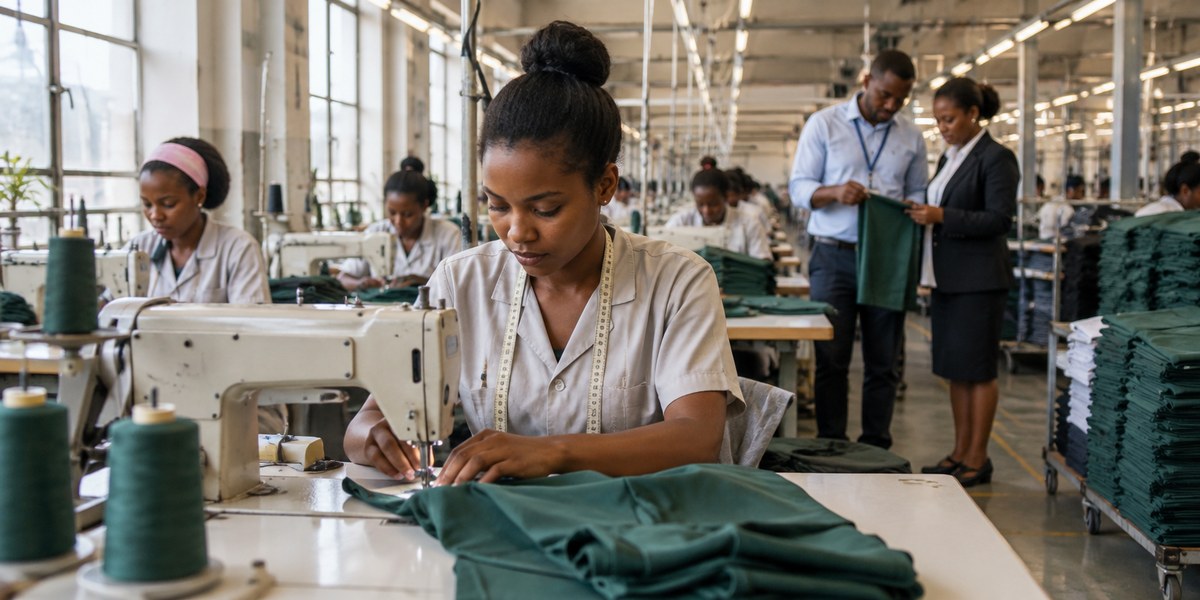
This is why the African Continental Free Trade Area matters beyond the volume of trade it creates. Intra-African trade is structurally different from Africa’s trade with the rest of the world. Agricultural and manufactured goods make up 46% of intra-African exports, compared with 24% of Africa’s total exports. The regional market is where African firms learn to process, manufacture, meet standards and scale. In other words, it is where capacity gets built.
That only happens if the agreement moves from participation to utilization. Ratification creates a legal opportunity. Readiness means gazetted tariff schedules, working customs systems, and certificates of origin that exporters can obtain. The real test is commercial, which means seeing whether firms, especially small and medium enterprises, claim the preferences, cross the border, and join regional value chains at a cost that makes the trip worthwhile.
Three shifts for the next phase
Firstly, governments should judge progress by utilization, not ratification. What share of eligible trade claims AfCFTA preferences? How long does clearance take at the border? What does it cost an SME to prove origin? These should become the headline indicators of implementation.
Secondly, trade reform and capacity building should be treated as one agenda. Energy, digital connectivity, skills, and credit to the private sector are not development issues sitting alongside trade policy. They are trade policy. Where credit to private firms is scarce, as in most of the economies we assessed, market access remains largely theoretical.
Thirdly, Africa should use its strategic resources to build capacity rather than simply extract rents. In a world where supply chains are being rearranged for security as much as for cost, critical minerals give African states rare bargaining power. That leverage should be used to secure refining, processing, and component manufacturing on the continent, backed by the skills and regulatory systems those industries need.
Competitiveness indices matter not because of the score a country receives, but because of the diagnostic conversation that score should start. The message from this year’s Africa Export Competitiveness Index is clear. Africa has largely written the rules of its single market. The next decade will be decided by whether it builds the institutions, infrastructure, and firm-level capabilities to put those rules to work.
ABOUT THE AUTHORS
- Mamadou Biteye is Executive Secretary of the African Capacity Building Foundation (ACBF).
- Amit Kapoor is Chair of the Institute for Competitiveness, India, and Lecturer at Stanford University.
Quick answers
On 4 September 2026, Somalia deposited its instrument of ratification, becoming the 50th State Party to the African Continental Free Trade Area.
Export policy explains only about 30% of the variation in export performance across the continent, with roughly 70% of the difference between Africa’s export leaders and low performers lying in productive capacity, infrastructure, skills and institutions.
Agricultural and manufactured goods make up 46% of intra-African exports, compared with 24% of Africa’s total exports.