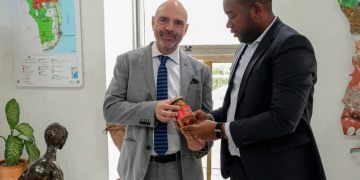
Inhambane Governor Francisco Pagula has invited an Italian diplomatic representative to a provincial tourism conference. The event aims to present investment opportunities and connect local projects with international capital.
The engagement is exploratory. No named Italian investor, signed project or delivery schedule has been announced. However, the diplomatic outreach signals a deliberate effort to internationalise the province’s project pipeline.
Italy’s Mattei Plan for Africa provides the broader policy backdrop. The plan sets cooperation priorities across multiple sectors, giving the Inhambane talks a formal strategic context beyond a single conference invitation.
Tourism projects offer the clearest near-term pipeline
The Mozambique Tourism Summit, scheduled for Vilankulo on 5 and 6 November 2026, is the centrepiece of the province’s investment drive. Summit organisers, speaking in October 2026, project the event will mobilise between US$350M and US$500M.
Provincial authorities have identified between 12 and 15 tourism concession areas. Together, they cover approximately 2,500 hectares, according to summit organisers in October 2026.
The Vilankulo and Inhassoro waterfront is earmarked for resort and hotel development. Both areas sit within the Special Golf Tourism Zone, established under Decree No. 56/2026. The zone spans six districts, including Massinga. Approved projects may access fiscal incentives, reserved land, priority dividend repatriation and infrastructure co-financing.
Infrastructure readiness remains the key variable. The World Bank-backed Mais Oportunidades project is preparing approximately US$7M in last-mile infrastructure works at Tofo Beach and along the Vilankulo seafront, per World Bank project data for 2026. By FurtherAfrica’s reading of the numbers, that spending is a precondition for converting interest into bankable assets.
What does the Italian engagement mean for investors?
For Italian companies, agriculture offers a natural complement to tourism. Local supply chains and processing facilities could serve both sectors. The current discussions provide no detail on crops, sites or proposed operators, so investors should treat this as an early-stage signal.
Land access, transport links, utilities and licensing remain the practical tests any project must pass before capital is committed. The November summit is the next moment to watch for concrete project presentations and expressions of interest.
The table below, drawn from summit organisers and official statements in October 2026, summarises the headline figures.
| Metric | Figure | Source / Period |
|---|---|---|
| Tourism investment target | US$350M–US$500M | Summit organisers, Oct 2026 |
| Concession area identified | ~2,500 hectares | Summit organisers, Oct 2026 |
| Mais Oportunidades works | ~US$7M | World Bank project data, 2026 |
‘Inhambane’s strongest investment signal is its growing project pipeline, not a signed transaction — and the November summit will test whether that pipeline converts into committed capital.’
Investors should track infrastructure delivery at Tofo and Vilankulo, monitor concession licensing progress, and watch for formal project announcements at the Mozambique Tourism Summit in November 2026.
Quick answers
Summit organisers project the November 2026 event in Vilankulo will mobilise between US$350M and US$500M in tourism investment for Inhambane province.
Established under Decree No. 56/2026, the zone covers six districts including Vilankulo, Inhassoro and Massinga, offering approved projects fiscal incentives, reserved land and priority dividend repatriation.
The World Bank-backed Mais Oportunidades project is funding approximately US$7M in last-mile infrastructure works at Tofo Beach and the Vilankulo seafront, per World Bank project data for 2026.