Radisson Hotel Group confirmed the designation in October 2026. The 138-room Radisson Safari Hotel Hoedspruit, in Limpopo province near Kruger National Park, became the group’s tenth Verified Net Zero property. The hotel opened on 1 February 2024 and received verification roughly 32 months later.
Radisson Safari Hotel Hoedspruit at a glance
| Who | Radisson Hotel Group / TÜV Rheinland (verifier) |
|---|---|
| What | Tenth Verified Net Zero property in Radisson’s portfolio |
| Where | Hoedspruit, Limpopo province, near Kruger National Park |
| Opened | 1 February 2024 |
| Verified | October 2026 |
| Solar wheeling start | 1 April 2027, with SolarAfrica |
Source: Radisson Hotel Group, October 2026
TÜV Rheinland independently verified the property against Radisson’s Net Zero Methodology for Hotels. That certification covers energy and guest-facing operations, as well as procurement — a wider scope than a simple renewable-energy purchase.
How does the hotel reach net zero?
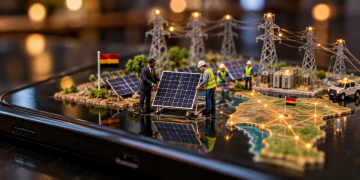
Around 20% of the hotel’s electricity comes from on-site solar panels. Renewable electricity certificates cover the remainder until a solar-wheeling agreement with SolarAfrica takes effect on 1 April 2027. The kitchen has been fully electrified. That removed gas and cut Scope 1 emissions directly.
The hotel also addresses emissions linked to food supply, laundry and amenity sourcing. Residual emissions are offset through carbon removal credits sourced via Greentrade from the TASC GRASS project — a South African grassland restoration and regenerative land management initiative. This connects the hotel’s emissions profile directly to its supply chain decisions.
By FurtherAfrica’s reading of the numbers, the investment case rests on independent certification and improved operating efficiency, supported by renewable power access. Together, they strengthen an asset’s environmental credentials while supporting cleaner reporting to lenders and corporate clients.
| Factor | Detail |
|---|---|
| Hotel opened | 1 February 2024 |
| Net-zero verification awarded | October 2026 |
| Rooms | 138 |
| Solar wheeling agreement start | 1 April 2027 |
| Radisson portfolio target | 100 Verified Net Zero hotels by 2030 |
What does the project mean for investors?
Hoedspruit shows that existing hospitality assets can adopt new energy systems without waiting for a new-build project. That sequence is significant. It offers a replicable model for upgrading lodges and mixed-use developments across Southern Africa.
South Africa’s grid is also improving. The government has allocated 9,600 MW of new capacity, including 4,600 MW of battery storage and 5,000 MW of gas-to-power, per government planning data. As renewable access expands, the solar wheeling model at Hoedspruit becomes easier to replicate elsewhere.
Independent verification gives lenders, asset owners and corporate guests a clear reference point. However, the model depends on credible measurement and strong project governance throughout its life.
Radisson aims to reach 100 Verified Net Zero hotels by 2030, according to its October 2026 announcement. The group also plans to extend the programme to more managed and franchised properties. African tourism investors should watch the 2027 wheeling agreement activation and the hotel’s sustained operational performance as the key signals ahead.
Quick answers
TÜV Rheinland independently verified the property against Radisson’s Net Zero Methodology for Hotels in October 2026. The certification covers on-site solar generation, full kitchen electrification, renewable electricity certificates, and carbon removal credits for residual emissions.
The solar wheeling agreement with SolarAfrica is scheduled to take effect on 1 April 2027, supplying the hotel with a greater share of directly sourced renewable electricity.
Radisson Hotel Group targets 100 Verified Net Zero hotels in its portfolio by 2030, according to the group’s October 2026 announcement. Hoedspruit is the tenth property to receive the designation and the first in Africa.