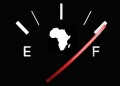
A new route into reserve management
Bank of Mozambique Governor Felisberto Navalha announced the initiative on 28 October 2026. He spoke at the opening of the bank’s 51st Advisory Council meeting in Tete.
The central bank plans to work with the Ministry of Mineral Resources and Energy to develop a purchasing framework. Operational rules and a formal work plan will follow.
The move aligns with a broader trend. African central banks have increasingly looked to locally mined gold to reduce dependence on foreign-currency assets. A domestic purchase programme would also create a new institutional buyer for Mozambican producers.
The value of Mozambique’s monetary gold reserves rose by approximately 65% in 2025, per Bank of Mozambique financial data. Reserves climbed from 21,210.8 million meticais in 2024 to 35,034.9 million meticais in 2025 (equivalent to roughly €283 million and €467 million respectively).
That increase reflected higher international gold prices rather than new physical acquisitions. The proposed purchases would represent a distinct policy shift, adding gold through domestic output rather than through price appreciation alone.
| Year | Gold Reserves (million meticais) | Gold Reserves (€ approx.) |
|---|---|---|
| 2024 | 21,210.8 | €283M |
| 2025 | 35,034.9 | €467M |
What does the output forecast mean for investors?
Mozambique’s gold production fell by 17% in 2025 to approximately 1,349.3 kilograms, according to budget-execution data. The sector is now on a recovery path.
The proposed 2027 Economic and Social Plan and State Budget projects production of 1,809.2 kilograms in 2027. That is a 44.1% increase from the 1,255.4 kilograms projected for 2026.
Mozambique gold production in kilograms
| 1,666.4 kg | 1,349.3 kg | 1,255.4 kg | 1,809.2 kg |
| 2023 | 2025 | 2026 (proj.) | 2027 (proj.) |
Source: dados de execução orçamental; Plano Económico e Social e Orçamento do Estado 2027
The 2027 figure would surpass the previous production peak of 1,666.4 kilograms recorded in 2023. By FurtherAfrica’s reading of the numbers, that recovery gives the central bank a credible supply base to draw from, provided operational rules are in place before output peaks.
Mozambique is also seeking to expand refining capacity. UAE investors have expressed interest in establishing the country’s first gold refinery. Local refining would improve traceability and support formal marketing of production.
The policy’s eventual scale will depend on the final purchase rules, available mine output and prevailing international gold prices. Each factor interacts with the others.
The central bank’s operational framework is the next market signal to watch, specifically purchase volumes, producer eligibility criteria and the pace of mining recovery through 2027.
Quick answers
The Bank of Mozambique wants to diversify its international reserves by sourcing gold from domestic mine output, rather than relying solely on price gains from existing holdings. The move follows a wider trend of African central banks increasing gold holdings to reduce dependence on foreign-currency assets.
The proposed 2027 Economic and Social Plan projects gold output of 1,809.2 kilograms, a 44.1% increase from the 1,255.4 kilograms projected for 2026 and above the previous production peak of 1,666.4 kilograms recorded in 2023.
The value of Mozambique’s monetary gold reserves rose approximately 65% in 2025, from 21,210.8 million meticais (roughly €283 million) in 2024 to 35,034.9 million meticais (roughly €467 million) in 2025, driven primarily by higher international gold prices.