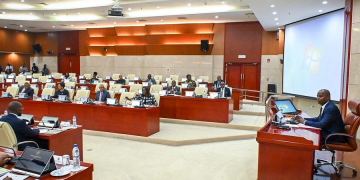
Mozambique’s Mutual Guarantees Fund began operating in 2025. The World Bank provided a US$120 million allocation for the facility. It currently works with 7 financial institutions including Banco Comercial de Investimentos, Standard Bank and Absa Bank in Mozambique.
A new channel for small-business credit
The fund aims to support financing for 15,000 Mozambican companies over seven years. It also targets more than 20,000 new jobs. That objective gives the programme significance well beyond individual loans.
Small firms often lack the collateral that banks require. They may also have limited credit histories or weak financial reporting. The fund reduces part of that risk for commercial lenders.
As a result, viable businesses can seek financing without offering the full level of security normally demanded. Banks gain a partial guarantee; borrowers gain access they would otherwise be denied.
Beatriz Freitas, president of the Sociedade de Garantias de Moçambique, said the fund had supported more than 630 companies. The figure covers roughly one year of operations. The initiative was officially launched in August 2025 by President Daniel Chapo.
Its policy aim is to turn business ideas into operating companies and employment. The early results provide an initial test of that model. However, the scale-up phase will matter more than the opening year.
What does the fund mean for investors?
Women-led businesses already represent at least 40% of supported companies. That share places female entrepreneurs at the centre of the fund’s expansion strategy. It also aligns the facility with broader ESG mandates that institutional investors increasingly apply.
The facility prioritises renewable energy, environmental conservation, tourism, trade and agriculture. These sectors can connect smaller firms to wider supply chains. Agriculture may require less guarantee coverage than some other activities, Freitas noted — a feature that could support broader lending as banks gain experience with the instrument.
Meanwhile, the fund is working with microfinance banks and other local institutions. Those partnerships aim to improve financial skills among small and medium-sized businesses. Stronger financial reporting at firm level will, in turn, make those companies more legible to commercial lenders over time.
The programme also needs to extend beyond Maputo. Most supported operations remain concentrated in the capital, while outreach has expanded across northern provinces. Regional distribution will be a key indicator of genuine scale.
Banks and entrepreneurs must both understand the mechanism. Wider awareness will determine whether the guarantee becomes a normal part of business lending in Mozambique. On current trajectory, the fund represents a developing credit infrastructure story worth tracking alongside Mozambique’s broader economic momentum.
The target of 15,000 companies is ambitious. Reaching it requires continued lender participation, regional distribution and disciplined risk management. For investors, the next indicators to watch are regional deployment rates, sector mix and the pace of progress toward the 15,000-company target.
Quick answers
The fund has supported more than 630 companies since it began operating in 2025, according to Beatriz Freitas, president of the Sociedade de Garantias de Moçambique.
The World Bank provided a US$120 million allocation. The fund targets financing for 15,000 Mozambican companies and more than 20,000 new jobs over seven years.
The fund currently works with three commercial banks: Banco Comercial de Investimentos, Standard Bank and Absa Bank in Mozambique, alongside microfinance and local institutions.