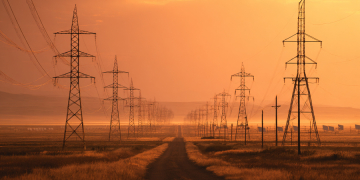
Africa’s struggle to move electricity from new plants to factories and homes is fast turning power transmission into its biggest energy challenge — and its most significant investment opportunity for private capital.
From generation push to grid bottlenecks
Over the past decade, many African governments pushed hard on generation — from renewables to gas and hydropower. However, transmission networks have not kept pace. A growing share of installed capacity is effectively stranded because grids cannot absorb or move the power.
A 2023 World Bank diagnostic, cited by African Leadership Magazine in August 2026, found that up to 25% of installed generation capacity in some sub-Saharan African countries is constrained by grid bottlenecks. That amounts to more than 30GW across the continent.
Against this backdrop, African Business reported on 16 August 2026 that insufficient transmission system capacity is now seen as the main bottleneck in Africa’s power sector. Timothy Mgaya, deputy managing director for distribution at the Tanzania Electric Supply Company (TANESCO), told the Infra for Africa Forum that the region has built generation but cannot fully use it because transmission has lagged.
He said Tanzania’s priority is now a grid stabilisation programme, with new substations and transmission lines across major cities and districts to improve reliability and unlock recent generation investments.
At the same event, Pakinam Kafafi, CEO of TAQA Arabia, highlighted a growing mismatch between investor appetite and grid readiness. She noted that many investors are ready to finance new generation projects, but hesitate where there is no transmission infrastructure to evacuate power to off-takers.
Her argument is direct: without bankable, predictable power transmission, generation projects carry higher risk and weaker cash flows, even when demand is strong. In her view, constrained public budgets mean private capital must take a larger role in grid development — provided governments deliver clear, stable policy and regulatory frameworks.
That message aligns with wider estimates that Africa needs tens of billions of dollars of transmission investment to match committed generation and demand growth. One recent analyst assessment, published in July 2026, put the continent’s transmission investment requirement at about US$30bn to align grid capacity with committed generation and forecast demand, including emerging data centre loads. For institutional investors, this is not only an infrastructure gap — it is an identifiable, scalable asset class.
New independent transmission models take shape
Judith Ssengendo, director of technical planning at Uganda’s Electricity Regulatory Authority (ERA), told African Business that Uganda has amended its Electricity Act to allow private participation in transmission for the first time. She framed the reform as a response to fiscal constraints and the need to tap private capital.
ERA has now developed an explicit regulatory framework for independent power transmission projects, including clear tariff methodologies, defined institutional responsibilities and dispute resolution mechanisms designed to give investors comfort on long-term cash flows.
ERA’s approach is already producing concrete projects. Ugandan commentary in July 2026 highlighted the Amari project as Africa’s first independent transmission project to reach financial close, developed by Gridworks under the new framework. Ssengendo said Uganda has licensed its first independent power transmission scheme and marked groundbreaking on 2 July 2026, signalling that transmission PPPs are moving from concept to execution. For investors, Uganda is emerging as a live test case for regulated, privately financed grid assets in a lower-income market.
What does Kenya’s KETRACO deal mean for investors?
Kenya is pushing a similar model on a larger scale. African Business reported that Kenya recently signed an agreement with Africa50 and India’s Power Grid Corporation, the country’s national grid operator, to build two high-voltage transmission lines under a public-private partnership structure.
Additional detail from Kenyan advisory analysis in July 2026 shows that Kenya Electricity Transmission Company (KETRACO) signed a 30-year concession in December 2025 with a consortium comprising Africa50 and Power Grid Corporation of India. The deal will finance, construct and operate two lines: a 400kV double-circuit line from Lessos to Loosuk, serving the Baringo–Silali geothermal corridor, and a 220kV double-circuit line from Kibos through Kakamega to Musaga in western Kenya.
Total investment is estimated at US$311m, equivalent to KES40.4bn, with no public funding contribution. Kipkemoi Kibias, acting managing director at KETRACO, described this as Africa’s first public-private partnership agreement for a transmission line and stressed the need to give private investors confidence across political cycles.
Kenya’s PPP framework and its Energy (Electricity Market, Bulk Supply and Open Access) Regulations 2026, which set rules for grid access and competitive power markets, together aim to give clearer signals on tariffs and risk allocation. Transmission is finally being treated as a bankable infrastructure business, not just a sovereign responsibility.
Meanwhile, Tanzania has signed a memorandum of understanding with Africa50 to develop its first independent power transmission projects through PPPs, again signalling a shift towards private participation in grid assets. Africa50’s Infra for Africa Forum in Dar es Salaam in August 2026 produced multiple concrete partnerships, including transmission PPP collaboration with TANESCO that is expected to support Tanzania’s initial independent power transmission project. These moves build on earlier African Union and African Development Bank advocacy for regional power pools and cross-border interconnectors as a path to lower system costs and stronger trade.
Cross-border corridors and storage on the agenda
Cross-border power transmission is also moving up the policy agenda. ZESCO’s director of transmission, operations and trade, Lioko Sitali, told African Business that investment in interconnectors is essential as the Southern African Power Pool and Eastern Africa Power Pool move towards deeper integration.
A July 2026 energy integration report noted that synchronisation between eastern and southern trading blocs could create one of the world’s largest cross-border electricity corridors, with full technical synchronisation targeted by the end of 2026. However, Sitali cautioned that regional trade will be limited if national transmission backbones remain weak. He also pointed to the need for utility-scale batteries and storage as more renewable energy connects to grids.
For investors and policymakers, the emerging picture is clear. Africa’s next energy gains will come less from headline generation announcements and more from the capital-intensive build-out of transmission lines, substations, interconnectors and storage. The opportunity now is to back credible PPP and independent transmission frameworks in countries like Uganda, Kenya and Tanzania — and to position early for a continent-wide grid expansion that could convert stranded generation into real, delivered demand. Investors should watch how regulators in these three markets handle their first tariff reviews under the new frameworks, as those outcomes will set the risk template for the rest of the continent.
Quick answers
A 2023 World Bank diagnostic found that up to 25% of installed generation capacity in some sub-Saharan African countries is constrained by grid bottlenecks, amounting to more than 30GW across the continent.
Kenya Electricity Transmission Company (KETRACO) signed a 30-year concession in December 2025 with Africa50 and Power Grid Corporation of India to build two high-voltage lines at a total cost of US$311m (KES40.4bn), with no public funding contribution.
A July 2026 analyst assessment put Africa’s transmission investment requirement at approximately US$30bn to align grid capacity with committed generation and forecast demand, including emerging data centre loads.