As the world accelerates its shift towards renewable energy, Africa is uniquely positioned to become the G20’s indispensable partner — provided that financial and technological partnerships are structured equitably.
With some of the planet’s highest solar irradiance and vast wind corridors, Africa holds untapped potential to become a global renewable energy engine room. Large-scale solar and wind farms, particularly in the Sahel, North Africa, and Southern Africa, could generate clean electricity, green hydrogen, and synthetic fuels for both domestic growth and export to G20 economies. This would help the G20 diversify supply chains, reduce geopolitical risks, and lower global emissions.
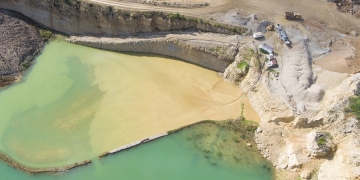
Beneath African soil lies another crucial asset: critical minerals. The continent boasts vast reserves of cobalt, lithium, rare earth elements, and platinum group metals — all essential for manufacturing batteries, wind turbines, and clean technologies. By developing responsible mining and local refining capacity, Africa can become a stable, diversified supplier for the G20’s green industries.
Also read: Mphanda Nkuwa Solar Electrification Brings Clean Energy to Mozambique’s Rural Communities
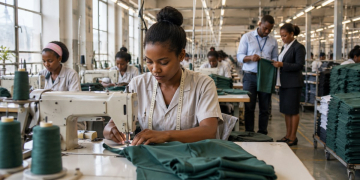
Beyond extraction, Africa can evolve into a green manufacturing hub. With targeted investment, technology transfer, and industrial policy support, African nations could build domestic capacity to produce solar panels, wind turbines, electrolysers, and even green industrial products like fertilisers and steel, fuelling both economic development and global decarbonisation.
Africa’s rich ecosystems offer significant carbon sequestration opportunities. Forest preservation, regenerative agriculture, and blue carbon initiatives could generate high-quality, verifiable carbon credits to support global net-zero goals — provided revenue-sharing is fair and transparent.
Finally, Africa must assert itself as a political partner in the global energy transition. Through active engagement in G20 forums and COP30 negotiations, the continent can demand concessional finance, technology access, and a genuine voice in global governance.
The opportunity is clear: Africa’s partnership is not charity — it is strategy.