Friday, November 13, 2026
FurtherArabiaFurtherAsiaFurtherBrazil
No Result
View All Result
FurtherAfrica
  • Countries
    • Angola
    • Botswana
    • Cape Verde
    • DRC
    • Eswatini
    • Ethiopia
    • Kenya
    • Malawi
    • Mauritius
    • Mozambique
    • Namibia
    • Nigeria
    • Rwanda
    • South Africa
    • Tanzania
    • Uganda
    • Zambia
    • Zimbabwe
  • Interviews
  • Understanding
  • Videos
  • Travel
  • Weekend
  • About
  • EN
  • PT
  • AR
  • IT
No Result
View All Result
FurtherAfrica
No Result
View All Result
Home Digital & Technology

Ghana Girls-in-ICT training reaches Savannah Region

FurtherAfrica by FurtherAfrica
November 12, 2026
in Digital & Technology, Digital Infrastructure, FA, Ghana, Investment, Macroeconomics & Policy, Sustainability & ESG
Reading Time: 4 mins read
752 48
0
Share via QR codeWhatsappShare on Facebook
Share on X
LinkedInPinteresteMail
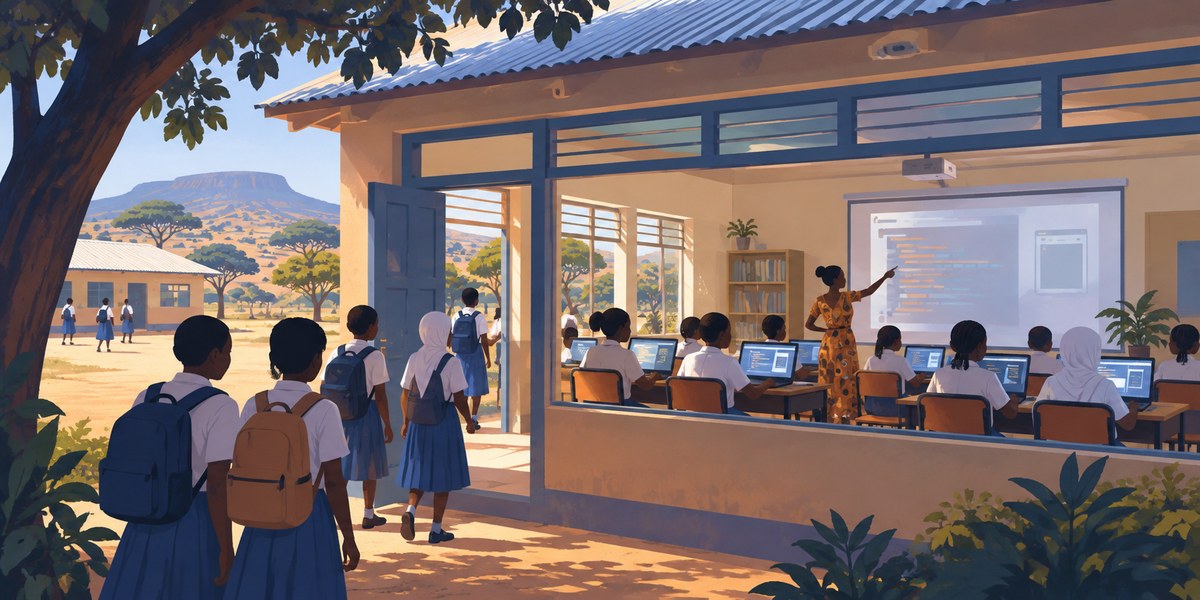
Ghana Girls-in-ICT training reached its second Savannah Region batch on 9 November 2026, spreading digital and coding skills across four community centres in a six-day course.

The Ministry of Communication, Digital Technology and Innovations opened the second batch on 9 November 2026. The course runs until 14 November 2026. It targets young girls in selected Savannah Region communities, covering information technology, coding and emerging technologies.

Four centres host the training simultaneously. That design cuts travel time for participants. It also gives the ministry a replicable model for delivering digital skills beyond Accra and other urban hubs.

Training reaches four Savannah centres

Sessions run at Yamoransa Lab in West Gonja and D/A Primary School in North Gonja. The Assembly Hall in Bole and St Augustine Junior High School in Sawla complete the network. Each site brings the curriculum directly into local communities.

The curriculum centres on practical skills. Participants study coding and IT fundamentals, then gain exposure to emerging technologies. That sequence builds a broader talent pipeline. It positions graduates for further study, digital employment or early-stage entrepreneurship.

By FurtherAfrica’s reading of the numbers, the four-centre structure is as significant as the six-day schedule. Placing foundational technology skills inside communities with fewer formal training options accelerates inclusion at the base of the talent pyramid.

What does the programme mean for Ghana’s digital economy?

The initiative sits within a wider national strategy. Huawei committed to provide free artificial-intelligence training for approximately 3,000 girls under the Girls-in-ICT Programme. That commitment followed a meeting between Minister Samuel Nartey George and Huawei Senior Vice President Steven Yi at Mobile World Congress 2026 in Barcelona.

Participants who complete the AI training are expected to continue through Ghana’s One Million Coders Programme. Huawei already operates in Ghana through Seeds for the Future, the ICT Academy and Women in Tech initiatives. Those channels deepen the pipeline from introductory training into advanced digital study.

Programme elementDetail
Savannah training period6 days, 9–14 November 2026
Savannah training centres4 community venues
Huawei AI training commitment~3,000 girls, announced MWC 2026

Ghana’s digital investment case increasingly includes talent, not only connectivity. For investors, the programme signals a policy effort to widen the technology workforce before demand accelerates. It also opens potential links with training providers, education platforms and employers across West Africa.

Executives and policymakers should track completion rates, regional participation figures and participant progression into advanced coding and AI programmes after 14 November 2026.

Quick answers
Where is the Ghana Girls-in-ICT second batch training taking place?

The second batch runs across four centres in the Savannah Region: Yamoransa Lab in West Gonja, D/A Primary School in North Gonja, the Assembly Hall in Bole, and St Augustine Junior High School in Sawla. The six-day course runs from 9 to 14 November 2026.

What has Huawei pledged under Ghana’s Girls-in-ICT Programme?

Huawei committed to provide free artificial-intelligence training for approximately 3,000 girls under the programme, following a meeting between Ghana’s Minister of Communication Samuel Nartey George and Huawei Senior Vice President Steven Yi at Mobile World Congress 2026 in Barcelona.

How does the Girls-in-ICT programme connect to Ghana’s broader digital strategy?

Participants who complete the AI training are expected to progress into Ghana’s One Million Coders Programme. The initiative is part of a national effort to build a wider digital talent pipeline beyond major urban centres.
Related

Tags: Ghana Ministry of CommunicationGirls-in-ICT ProgrammeHuaweiOne Million Coders ProgrammeSamuel Nartey GeorgeSavannah RegionWomen in Tech
ScanSendShare320
Tweet200
Share56Pin72Send
FurtherAfrica

FurtherAfrica

Founded in 2015 FurtherAfrica is an online platform centralising news and content focusing on the development and growth story of the African continent.

Related Posts

Climate Finance

Mozambique climate resilience needs US$37.2B in a decade

by FurtherAfrica
November 13, 2026
Capital Markets

Nigeria’s West African bond market plan spans 10 nations

by FurtherAfrica
November 12, 2026
Trade & Logistics

Private jet vs first class on African multi-stop routes

by FurtherAfrica
November 12, 2026
Digital & Technology

Angola cybercrime cooperation tops CPLP agenda

by FurtherAfrica
November 12, 2026
Development Finance

UAE fund backs US$15M Tanzania road project to boost regional trade

by FurtherAfrica
November 12, 2026
FurtherAsia

Read the Latest

Climate Finance

Mozambique climate resilience needs US$37.2B in a decade

by FurtherAfrica
November 13, 2026
0

Mozambique climate resilience requires US$37.2B over ten years, President Chapo said at COP31 — here is what investors must watch.

Read moreDetails

Nigeria’s West African bond market plan spans 10 nations

November 12, 2026

Private jet vs first class on African multi-stop routes

November 12, 2026

Angola cybercrime cooperation tops CPLP agenda

November 12, 2026

Ghana Girls-in-ICT training reaches Savannah Region

November 12, 2026

FurtherAfrica Partners Network

The ExchangeFarmers Review Africa360 Mozambique
TechGist AfricaEnergy Capital & PowerClub of Mozambique
Taarifa RwandaWeb3AfricaSee Africa Today
Africa Global FundsNovafricaCrudeMix Africa
Harambee AfricaBotswana unpluggedFinancial Insights Zambia
O EconómicoDigilogic Africa 
FurtherAfrica

© 2021 FurtherMarkets

FurtherAfrica is a FurtherMarkets platform

  • Countries
  • Interviews
  • Understanding
  • Videos
  • Travel
  • Weekend
  • About
  • EN
  • PT
  • AR
  • IT

Follow Us

Welcome Back!

Login to your account below

Forgotten Password?

Retrieve your password

Please enter your username or email address to reset your password.

Log In
No Result
View All Result
  • Countries
    • Angola
    • Botswana
    • Cape Verde
    • DRC
    • Eswatini
    • Ethiopia
    • Kenya
    • Malawi
    • Mauritius
    • Mozambique
    • Namibia
    • Nigeria
    • Rwanda
    • South Africa
    • Tanzania
    • Uganda
    • Zambia
    • Zimbabwe
  • Interviews
  • Understanding
  • Videos
  • Travel
  • Weekend
  • About
  • EN
  • PT
  • AR
  • IT

© 2021 FurtherMarkets

This website uses cookies. By continuing to use this website you are giving consent to cookies being used. Visit our Privacy and Cookie Policy.