A clear political signal from Africa
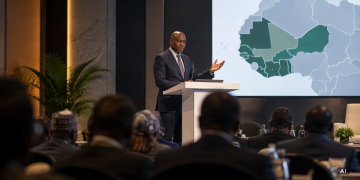
Nandi-Ndaitwah made the appeal during Namibia’s address to the 81st session of the UN General Assembly in New York on 23 September 2026. She argued that the organisation’s leadership must reflect the gender equality it promotes globally.
Her message was direct. “Namibia believes it is time that a woman is elected as Secretary-General of our organisation,” she said. No woman has ever served as UN Secretary-General since the body was founded in 1945.
António Guterres’s second term ends on 31 December 2026. The Security Council is conducting informal straw polls and will recommend a candidate to the General Assembly, which makes the formal appointment. The next Secretary-General takes office on 1 January 2027.
Nandi-Ndaitwah did not endorse a specific candidate. However, her intervention adds a clear African voice to a selection process historically shaped by the permanent five Security Council members. That signal carries institutional weight at a moment when the succession race is actively under way.
What does the appeal mean for African capital markets?
Nandi-Ndaitwah paired the leadership call with demands for structural reform. Namibia wants stronger African representation in decisions on security, trade and development finance. These are not simply diplomatic positions — they reflect where African governments see systemic risk to their access to capital.
On that front, Namibia welcomed the forthcoming launch of the Africa Credit Rating Agency (AfCRA), set to be established in Mauritius in October 2026. AfCRA would give African borrowers a regional platform for credit analysis, independent of the major global rating agencies. A credible regional rating body could, over time, reduce the information asymmetry that inflates borrowing costs across the continent.
Investors will rightly focus on implementation. Regional institutions need transparent methodologies, credible governance and sustained market adoption before they can shift financing conditions in a meaningful way.
Climate exposure and infrastructure investment
Climate and water security featured prominently in the address. Namibia contributes very little to global greenhouse-gas emissions yet faces significant climate-related risks. Water investment is a central infrastructure priority given the country’s arid conditions.
As a result, Namibia’s engagement with regional climate coordination and resilient infrastructure policy remains a strategic focus for both government and potential investors.
The crisp takeaway for institutional observers: Namibia is using multilateral forums to advance a package of reforms — on gender leadership, credit architecture and climate — that together signal a more assertive African posture in global economic governance.
Investors and policymakers should track the UN succession timeline and AfCRA’s October launch closely.
Quick answers
President Netumbo Nandi-Ndaitwah argued that the UN’s leadership should reflect the gender equality the organisation promotes globally. She made the call at the 81st UN General Assembly session in September 2026, as the race to succeed António Guterres — whose term ends 31 December 2026 — is actively under way.
The Africa Credit Rating Agency (AfCRA) is a regional body designed to provide independent credit analysis for African borrowers. It is scheduled to be established in Mauritius in October 2026 and is supported by AUDA-NEPAD.
No. Since the United Nations was founded in 1945, all eight Secretaries-General have been men. The 2027 appointment will be the first opportunity to change that record.