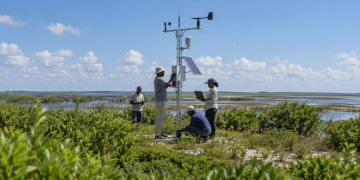
ATLAS Space Operations activated a second antenna on 18 September 2026. The move raises simultaneous satellite contacts from one to two.
The investment expands Rwanda’s commercial ground infrastructure near the Equator. It also creates additional access for operators supporting African markets and space missions.
A second antenna expands access
The new antenna belongs to US-based ATLAS Space Operations. The company is using space at the Rwanda Space Agency facility under a Ground Station as a Service arrangement.
Under this model, ATLAS pays to use ground-station space. The Rwanda Space Agency has not disclosed the agreement’s value.
The first antenna remains fully owned by Rwanda. The second system forms part of ATLAS’s global ground-station network, which includes more than 50 antennas across 20 countries, according to the company.
ATLAS chief executive Kristin Rice said the antenna improves operator access to the facility. She also linked the investment to demand for ground-station services near the Equator.
The new system measures 3.7 metres and receives S-band signals. Its equipment can support an upgrade for X-band reception without replacing the antenna.
During commissioning, ATLAS completed more than 350 scheduled test contacts. The company reported no recorded error seconds during those tests.
That performance supports the commercial case for hosted ground infrastructure. Operators can gain regional coverage without building and managing every site themselves.
What does the deal mean for investors?
Mwulire sits in Rwamagana District, about two degrees south of the Equator. The site stands at an altitude of 1,668 metres.
Its position allows coverage of low-inclination satellites that higher-latitude stations may miss. It also creates additional contact opportunities for satellites using mid-inclination orbits.
The site has limited obstructions, according to the Rwanda Space Agency. That reduces interference risks during communication with satellites.
The agency is marketing the teleport to satellite operators beyond Rwanda. Available services include antenna hosting and mission-control support.
Rwanda’s ground infrastructure is becoming a regional platform for African space missions.
The new antenna arrives as Rwanda broadens demand for satellite-based data. In August, the government announced a partnership with Planet Labs.
The programme will expand access to near-daily Earth-observation data. Its users will include government institutions, universities, start-ups and development partners.
Applications include agriculture, food security, environmental monitoring, urban planning and disaster management. These uses can create demand for both satellite data and ground services.
In June, the World Teleport Association awarded Mwulire Tier 3 certification. The facility became the first in sub-Saharan Africa to receive that certification.
For investors, the signal is broader than one antenna. Rwanda is building shared infrastructure around a growing space-data economy.
The hosting model also limits the capital required from individual satellite operators. Meanwhile, local infrastructure can retain more value from international missions.
This development aligns with broader digital investment momentum across the continent — including Rwanda’s growing fintech links, as seen in the Bank of Kigali’s CIPS connection opening Rwanda to China payments.
Investors should watch further antenna deployments, new hosting agreements and demand for mission-control services. They should also track how quickly Rwanda’s satellite-data partnership converts into recurring commercial use.
Quick answers
ATLAS Space Operations activated a second satellite antenna at the Mwulire teleport on 18 September 2026, doubling simultaneous satellite contacts from one to two.
Tier 3 is a quality benchmark awarded by the World Teleport Association; Mwulire received it in June 2026, becoming the first facility in sub-Saharan Africa to achieve that standard.
Under the model, ATLAS Space Operations pays the Rwanda Space Agency to use space at the facility, avoiding the need to build and own the entire site, while Rwanda retains ownership of its original antenna.