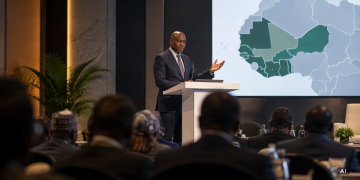
The target emerged from the 2026 Joburg Indaba, where Minerals Council South Africa president Paul Dunne set out a joint agenda for unlocking delayed projects. The R50 billion pool represents domestic capital that has already been planned and committed. It is not a new funding package. The money exists — it is simply waiting for the right conditions to move.
The deadline follows the September 2026 launch of the third phase of the Government-Business Partnership for Growth and Jobs. That programme targets inclusive growth, job creation and investor confidence. Mining sits alongside other identified growth sectors within the wider initiative.
What is holding up the capital?
Administrative constraints and complex approval processes have slowed progress across new mines, expansions and related infrastructure. Investors face longer lead times and reduced certainty around delivery. Those delays have real costs: deferred production, lost employment and weaker supply-chain activity.
The partnership aims to break that cycle through structured public-private cooperation. Faster licensing alone will not release capital. Developers also need reliable infrastructure, clear agency responsibilities and timely decisions across multiple government departments.
The 2028 target converts policy intent into a measurable commitment. It shifts the conversation from aspiration to execution.
What does the deal mean for investors?
The R50 billion figure signals the scale of capital available if identified obstacles are removed. It does not guarantee immediate construction or final investment decisions. However, it sets a horizon against which progress can be measured.
Paul Dunne’s joint-accountability framing changes the investment signal. Government must improve the operating framework. Industry must advance projects and honour its own commitments. Neither side can defer to the other.
Meanwhile, Eskom recorded more than 500 consecutive days without load shedding as of early October 2026, per the utility’s own reporting. That run strengthens the case that electricity reliability has improved — a material input cost for most mining operations.
Regulatory certainty will shape whether companies expand existing operations or redirect capital elsewhere. Investors are likely to track approval timelines, infrastructure access and the movement of stalled projects into active construction phases.
A successful release of the capital would extend well beyond the mining sector. Contractors, equipment suppliers, transport operators and regional economies linked to new projects would all benefit from the multiplier effect.
The 2028 deadline makes implementation the next market signal — and project approvals, infrastructure performance and visible progress on stalled developments will tell investors whether the commitment holds.
Quick answers
South Africa has identified more than R50 billion in domestic capital already planned and committed to mining projects. The 2028 target aims to release that capital by removing regulatory and administrative barriers.
Minerals Council South Africa and the government share joint accountability. The framework was set out at the 2026 Joburg Indaba under the third phase of the Government-Business Partnership for Growth and Jobs.
Complex approval processes, administrative delays and infrastructure constraints have stalled projects. The partnership aims to cut approval times and improve coordination across government agencies to move stalled projects into construction.