Zambia has committed K3 million to finish the Kwilimuna Youth Resource Centre in Mpongwe District. The announcement came on 6 October. Kangwa Chileshe, permanent secretary at Zambia’s Ministry of Youth, Sport and Arts, confirmed the allocation. The facility will offer skills development, recreational activities, sport and arts programming once complete.
At current exchange rates, K3 million translates to roughly US$110,000. That is a modest capital outlay by development-finance standards. However, it is a targeted intervention in a district that currently lacks dedicated youth infrastructure.
A targeted investment in youth infrastructure
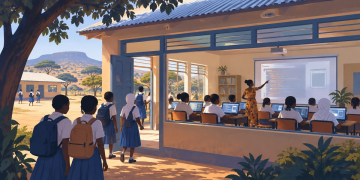
Mpongwe is a rural district in Copperbelt Province. Access to structured youth services there is limited. The Kwilimuna centre aims to change that. It will provide safe spaces for recreation and personal development alongside practical skills training.
The government’s wider plan positions youth resource centres as multi-purpose community assets. Sport and arts facilities will sit alongside vocational programming. That combination broadens the centre’s appeal and its potential to generate measurable social outcomes.
Chileshe also proposed Kwilimuna as a model for future centres. A functioning pilot gives the government a concrete case to present to development partners. It shows costs, usage patterns and the scope of services that a modest public facility can deliver.
Can Kwilimuna attract future partners?
The model approach is deliberate. Public investment completes the physical structure. Development partners then assess the site before committing to replication elsewhere. That sequencing reduces risk for both government and funders.
Potential partners include training providers, sports bodies, creative organisations and development agencies. Each brings programme funding or technical capacity. Together, they can extend the centre’s impact well beyond what state capital alone could achieve.
However, construction is only the first step. Partners will examine maintenance budgets, local demand and staffing. Long-term impact depends on durable operations, not just completed buildings. The government will need to demonstrate that Kwilimuna runs active programmes before wider roll-out gains traction.
What does the deal mean for investors?
Skills training offers the clearest economic link to investable outcomes. Better-equipped centres support employability and local entrepreneurship. Sport and arts facilities strengthen community cohesion and broaden participation rates.
Zambia’s youth population is growing rapidly. Demand for facilities of this kind will rise alongside it. A documented pilot at Kwilimuna could inform a wider pipeline of partner-funded centres across the country.
The Kwilimuna allocation is small in isolation. As a proof-of-concept, it carries strategic weight. Investors and development partners should watch whether the centre secures operating partners, launches regular programmes and feeds into a formal national youth infrastructure strategy.
Quick answers
The government has allocated K3 million, equivalent to approximately US$110,000, to complete the Kwilimuna Youth Resource Centre in Mpongwe District.
The centre will offer skills development, vocational training, recreational activities, sport facilities and arts programming once construction is complete.
The government intends the facility to serve as a model for partner-funded youth centres across Zambia, giving development partners a documented pilot to assess before committing to wider replication.