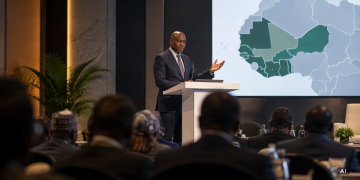
Malawi has committed US$1 million in public funds to its national seed sector. AGRA President Alice Ruhweza disclosed the pledge at the African Union Inaugural Africa Seed Summit, held in Ezulwini, Eswatini, from 5 to 7 October 2026. The summit gathered member states under the theme “Resilient Seed Systems for a Food Secure Africa.”
The pledge is modest in absolute terms. However, it signals something markets often overlook: government ownership. When states attach seed plans to national budgets, execution rates rise. Donor-led programmes, by contrast, frequently stall at the policy stage.
Public funding tests policy delivery
Regional peers have moved further. Nigeria established a ₦50 billion (approximately US$37.66 million) Presidential Catalytic Seed Fund. Ethiopia mobilised US$5 million in partnership with the Gates Foundation and the Agricultural Transformation Institute. Malawi’s commitment is smaller. Yet it establishes a direct budget line — and that changes the investment calculus.
A funded seed plan creates clearer entry points for private capital. Breeding programmes, multiplication farms, certification laboratories and distribution networks all require sustained financing. Public commitment reduces the perceived risk for commercial partners willing to co-invest alongside government.
Ruhweza’s address stressed one consistent message: plans advance when treasuries back them. The Malawi commitment, however early-stage, positions the country as a credible participant in regional seed-system development.
What does the AU summit mean for investors?
The African Union’s 2025 Seed Sector Performance Index assessed 50 of the AU’s 55 member states. Its findings expose a persistent gap between formal policy frameworks and actual farm-level seed access. That gap represents both a market constraint and an investable opportunity.
Breeding, seed multiplication, testing, certification and last-mile distribution all sit within that opportunity set. The index findings effectively map where private capital can generate commercial returns while closing structural deficits in food production.
Southern Africa scores relatively well on recognition of farmer-managed seed systems, according to the index. That regional strength provides a meaningful benchmark. It also suggests that additional investment in certified variety pipelines could yield faster results than in lower-scoring sub-regions.
Cross-border harmonisation as the next catalyst
Summit speakers called for cross-border variety recognition across African markets. Harmonised standards reduce duplication. They also shorten the timeline from breeding investment to commercial scale — a critical consideration for seed companies operating across multiple jurisdictions.
Investors will still need evidence of procurement volumes, regulatory follow-through and sustained farmer demand. Public commitments are converting seed policy into investable delivery pipelines, but execution remains the decisive variable.
For Malawi, the next indicators to watch are budget disbursement schedules, seed multiplication capacity expansion, and procurement activity under national farm-input programmes.
Quick answers
Malawi has pledged US$1 million in public funds to its seed sector, as disclosed by AGRA President Alice Ruhweza at the African Union Inaugural Africa Seed Summit in October 2026.
The summit was held in Ezulwini, Eswatini, from 5 to 7 October 2026, under the theme ‘Resilient Seed Systems for a Food Secure Africa,’ bringing together AU member states to address gaps in seed policy and farm-level access.
Nigeria established a ₦50 billion (approximately US$37.66 million) Presidential Catalytic Seed Fund, and Ethiopia mobilised US$5 million with the Gates Foundation and the Agricultural Transformation Institute — both exceeding Malawi’s US$1 million pledge.