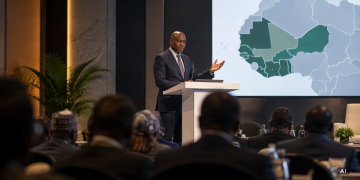
Microsoft set out its industrial AI strategy at African Energy Week 2026 in Cape Town. The session brought together energy operators and technology leaders. It is entering a market where complex asset bases are expanding and operators need better returns from existing data.
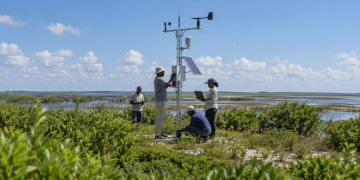
The company’s model connects operational technology (OT) with enterprise platforms. OT systems monitor and control physical equipment on site. Enterprise platforms hold production and maintenance records, alongside financial data. Linking both data streams lets companies spot equipment problems earlier and plan repairs before failures occur.
Microsoft’s industrial AI pitch at a glance
| Who | Microsoft, with Gargi Mishra and Gareth Ireland |
|---|---|
| What | AI predictive maintenance linking equipment data with enterprise systems |
| Tools | Azure, Copilot Studio and Power Apps |
| Where | African Energy Week 2026, Cape Town |
| Status | No production contract announced |
From industrial data to earlier repairs
Microsoft singled out Azure and Copilot Studio for these industrial applications, with Power Apps also in the mix. The tools allow companies to build automated workflows and deploy AI agents inside existing operations. Those agents can complete multi-step tasks with limited human input.
Operators still need clear controls over data access and automated recommendations. Gargi Mishra, Microsoft’s frontier industry advisor for energy and resources, said companies can extract more value from data they already generate. That framing gives the approach a practical edge. Operators do not need to replace every legacy system before testing AI.
Gareth Ireland, a senior AI specialist at Microsoft, said adoption also depends on embedding AI into tools that employees already use daily. The commercial test is whether alerts reach maintenance teams fast enough to act. Security sits alongside performance here. An incorrect recommendation can affect equipment integrity, worker safety and business continuity.
Industrial AI creates value when it turns existing equipment data into timely operating decisions, and that was the central point of Microsoft’s pitch at the event.
What does this mean for investors in African energy?
Microsoft has announced no production contract. It is positioning AI predictive maintenance as an entry point for wider industrial adoption across the continent. The timing aligns with a significant capital cycle in African energy.
The African Energy Chamber‘s 2026 Outlook projects African oil and gas production at 11.4 million barrels of oil equivalent per day this year. The same Outlook attributes US$41 billion in upstream capital expenditure to 2026, driven by offshore prospects in Angola, Mozambique and Nigeria.
| Indicator | 2026 Figure |
|---|---|
| African oil and gas production | 11.4m barrels of oil equivalent per day |
| Upstream capital expenditure | US$41B |
| Key offshore markets | Angola, Mozambique, Nigeria |
For investors, the opportunity sits in asset uptime rather than AI branding. Offshore facilities, mines and power plants carry high costs when failures interrupt output. Predictive maintenance shifts some intervention from emergency response to planned work.
By FurtherAfrica’s reading of the numbers, industrial AI adoption will advance through narrow operating use cases first. The return depends on reliable data pipelines, secure connections and staff who can act on alerts quickly.
Executives and policymakers should watch pilot conversion rates, emerging cybersecurity standards and the quality of local implementation partners. Those signals will show whether AI predictive maintenance can move from demonstration to measurable production gains across Africa.
Quick answers
Microsoft is deploying AI predictive maintenance tools across Africa’s oil, gas, utilities and mining sectors. The approach connects operational technology data with enterprise platforms to reduce unplanned equipment downtime.
The African Energy Chamber’s 2026 Outlook projects US$41 billion in upstream capital expenditure this year, with offshore projects in Angola, Mozambique and Nigeria as key drivers.
Microsoft is deploying Azure, Copilot Studio and Power Apps for industrial applications, enabling operators to build AI-driven maintenance workflows within their existing operations.