Friday, November 13, 2026
FurtherArabiaFurtherAsiaFurtherBrazil
No Result
View All Result
FurtherAfrica
  • Countries
    • Angola
    • Botswana
    • Cape Verde
    • DRC
    • Eswatini
    • Ethiopia
    • Kenya
    • Malawi
    • Mauritius
    • Mozambique
    • Namibia
    • Nigeria
    • Rwanda
    • South Africa
    • Tanzania
    • Uganda
    • Zambia
    • Zimbabwe
  • Interviews
  • Understanding
  • Videos
  • Travel
  • Weekend
  • About
  • EN
  • PT
  • AR
  • IT
No Result
View All Result
FurtherAfrica
No Result
View All Result
Home Capital Markets

Angola finance summit targets Africa growth gap

FurtherAfrica by FurtherAfrica
November 4, 2026
in Angola, Banking & Financial Services, Capital Markets, Development Finance, FA, Investment, Macroeconomics & Policy
Reading Time: 5 mins read
753 57
0
Share via QR codeWhatsappShare on Facebook
Share on X
LinkedInPinteresteMail
Angola African finance took centre stage at AFIS 2026, where Luanda hosted a continental push to redirect savings into productive investment.

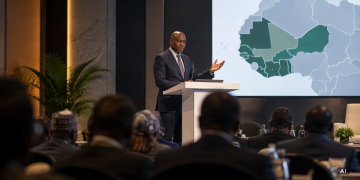
Angola is urging African financial institutions to channel more capital into businesses, infrastructure and jobs. The appeal came from José de Lima Massano, Angola’s Minister of State for Economic Coordination, at the Africa Financial Summit (AFIS) in Luanda on 3 November 2026. His argument was direct: Africa’s challenge is not simply raising funds. It is turning capital into production, employment and improved living standards.

The summit drew more than 1,250 financial leaders over two days. Bankers, central-bank governors, development-finance executives and private-sector investors gathered on 3–4 November 2026. Their shared question was how to align African savings with the real economy.

From savings to productive capital

Massano pointed to three structural advantages Africa holds. Its young population, its strategic natural resources, and the African Continental Free Trade Area all support long-term growth. However, those advantages need financing that reaches operating companies. Local lenders must back firms that produce goods, build infrastructure and trade across borders.

The opportunity is real for investors. More credit to smaller companies widens formal business activity. It creates new assets for banks, private funds and development financiers. Infrastructure finance offers a route into longer-term returns. Better transport, energy and digital networks lower business costs and connect national markets.

‘Africa’s growth depends on turning financial strength into productive investment,’ Massano said at the summit, as reported by Ahram Online. By FurtherAfrica’s reading of the numbers, the core issue is allocation, not liquidity alone. Institutions must decide where capital generates productive cash flows.

What does the AFIS 2026 appeal mean for investors?

Africa’s banking sector already shows momentum. AFIS 2026 figures show banking assets reached US$28.2bn in 2025, up 11.5% year on year. Net profits rose 23% over the same period, to approximately US$1.08bn.

IndicatorReported figureSource
Banking assets, 2025US$28.2bnAFIS 2026
Asset growth, 202511.5%AFIS 2026
Net profits, 2025~US$1.08bnAFIS 2026

Angola’s own macro position adds weight to the message. According to IMF estimates cited by the US Department of State’s 2026 investment climate statement, Angola’s economy grew 3.1% in 2025. Separate data show growth accelerating to 5.3% in the first quarter of 2026, with public debt at 51.2% of GDP. The government also plans to raise approximately US$1.7bn in international capital markets for the 2026 budget, per the same US Department of State report.

Angola is pursuing economic diversification under its National Development Plan 2023–2027. However, risk assessment, collateral rules and weak project preparation still restrict lending across the continent.

Investors should watch new credit programmes, project pipelines and cross-border transactions linked to the continental trade agreement as the next concrete test of AFIS commitments.

Quick answers
What was the main message at AFIS 2026 in Luanda?

Angola’s Minister of State for Economic Coordination, José de Lima Massano, called on African financial institutions to direct more savings into productive investment, including businesses, infrastructure and job creation, rather than leaving capital underallocated.

How large is Africa’s banking sector according to AFIS 2026 figures?

AFIS 2026 data show African banking assets reached US$28.2bn in 2025, up 11.5% year on year, with net profits rising 23% to approximately US$1.08bn over the same period.

How is Angola’s economy performing ahead of its capital market push?

Angola’s economy grew 3.1% in 2025 per IMF estimates, accelerating to 5.3% in the first quarter of 2026, with public debt at 51.2% of GDP and plans to raise approximately US$1.7bn in international capital markets for the 2026 budget.
Related

Tags: AFIS 2026african banking sectorAfrican Continental Free Trade AreaAngolaJosé de Lima MassanoLuandaNational Development Plan 2023-2027
ScanSendShare324
Tweet203
Share57Pin73Send
FurtherAfrica

FurtherAfrica

Founded in 2015 FurtherAfrica is an online platform centralising news and content focusing on the development and growth story of the African continent.

Related Posts

Climate Finance

Mozambique climate resilience needs US$37.2B in a decade

by FurtherAfrica
November 13, 2026
Capital Markets

Nigeria’s West African bond market plan spans 10 nations

by FurtherAfrica
November 12, 2026
Trade & Logistics

Private jet vs first class on African multi-stop routes

by FurtherAfrica
November 12, 2026
Digital & Technology

Angola cybercrime cooperation tops CPLP agenda

by FurtherAfrica
November 12, 2026
Digital & Technology

Ghana Girls-in-ICT training reaches Savannah Region

by FurtherAfrica
November 12, 2026
FurtherAsia

Read the Latest

Climate Finance

Mozambique climate resilience needs US$37.2B in a decade

by FurtherAfrica
November 13, 2026
0

Mozambique climate resilience requires US$37.2B over ten years, President Chapo said at COP31 — here is what investors must watch.

Read moreDetails

Nigeria’s West African bond market plan spans 10 nations

November 12, 2026

Private jet vs first class on African multi-stop routes

November 12, 2026

Angola cybercrime cooperation tops CPLP agenda

November 12, 2026

Ghana Girls-in-ICT training reaches Savannah Region

November 12, 2026

FurtherAfrica Partners Network

The ExchangeFarmers Review Africa360 Mozambique
TechGist AfricaEnergy Capital & PowerClub of Mozambique
Taarifa RwandaWeb3AfricaSee Africa Today
Africa Global FundsNovafricaCrudeMix Africa
Harambee AfricaBotswana unpluggedFinancial Insights Zambia
O EconómicoDigilogic Africa 
FurtherAfrica

© 2021 FurtherMarkets

FurtherAfrica is a FurtherMarkets platform

  • Countries
  • Interviews
  • Understanding
  • Videos
  • Travel
  • Weekend
  • About
  • EN
  • PT
  • AR
  • IT

Follow Us

Welcome Back!

Login to your account below

Forgotten Password?

Retrieve your password

Please enter your username or email address to reset your password.

Log In
No Result
View All Result
  • Countries
    • Angola
    • Botswana
    • Cape Verde
    • DRC
    • Eswatini
    • Ethiopia
    • Kenya
    • Malawi
    • Mauritius
    • Mozambique
    • Namibia
    • Nigeria
    • Rwanda
    • South Africa
    • Tanzania
    • Uganda
    • Zambia
    • Zimbabwe
  • Interviews
  • Understanding
  • Videos
  • Travel
  • Weekend
  • About
  • EN
  • PT
  • AR
  • IT

© 2021 FurtherMarkets

This website uses cookies. By continuing to use this website you are giving consent to cookies being used. Visit our Privacy and Cookie Policy.