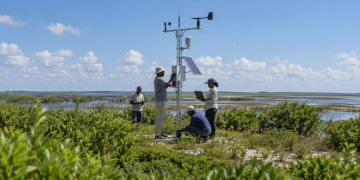
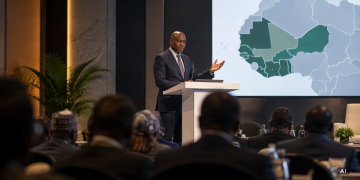
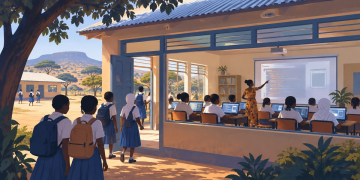
Coca-Cola is funding the //Gam-i Swakop Basin Resilience Project, a five-year initiative combining hard infrastructure with ecosystem restoration. The investment addresses one of southern Africa’s most acute urban water challenges. Windhoek depends heavily on the Swakop River Basin, a system under sustained pressure from drought cycles, rising demand and high evaporation rates.
//Gam-i Swakop Basin Resilience Project
| Who | Coca-Cola, Global Water Challenge, WWF Namibia |
|---|---|
| What | Sand storage dams, boreholes, invasive plant clearing, tree planting and water resilience action plan |
| How much | US$1.22M |
| Where | Swakop River Basin, Windhoek, Namibia |
| When | Five years, plan through 2030 |
Source: Coca-Cola
A basin-level response to water stress
The project will construct two sand storage dams to retain water within the river system. These structures slow surface runoff and support groundwater recharge in the Windhoek aquifer, two outcomes that conventional pipe-and-pump investment cannot easily replicate. Two boreholes will supplement the aquifer recharge work directly.
Restoration targets are equally concrete. The project will clear invasive alien plants across 235 hectares and plant 750 trees in river buffer zones and degraded areas within Windhoek’s informal settlements. Vegetation work of this kind strengthens catchment health and reduces sediment loads that degrade water quality over time.
A water resilience action plan will guide interventions across the basin through 2030. That planning layer is significant. It converts a capital project into an ongoing management framework — one policymakers can build on after the initial funding cycle ends.
The project is being implemented in partnership with the Global Water Challenge and WWF Namibia, bringing technical capacity in water access and conservation respectively.
What does the project mean for investors?
The Namibia allocation sits within Coca-Cola’s Africa Water Stewardship Initiative, launched in September 2024. That programme commits nearly US$25 million to water solutions across 20 African countries through 2030, according to company figures. By FurtherAfrica’s reading of the figures, the Namibia project represents roughly 4.9% of that total and signals the programme’s reach into smaller, high-stress markets.
Water security projects increasingly combine physical infrastructure with ecosystem repair. That blended model improves investment durability. Nature-based components lower long-run maintenance costs and generate co-benefits — biodiversity, soil stability, community livelihoods — that pure engineering cannot deliver.
For Coca-Cola’s bottling operations, water availability has direct production relevance. The project therefore aligns community resilience with business continuity. Policymakers gain a replicable template for climate adaptation finance that spans measurable assets and basin-level planning in a single structure.
| Measure | Figure |
|---|---|
| Namibia project investment | US$1.22M |
| Project duration | Five years |
| Land restoration target | 235 hectares |
| Tree planting target | 750 trees |
| Africa-wide programme | Nearly US$25M across 20 countries through 2030 |
Delivery milestones to track include dam construction, borehole commissioning, hectares restored and tree survival rates. Progress against these markers through 2026 will indicate whether the model scales across the broader Africa programme.
Quick answers
Coca-Cola is committing US$1.22 million to a five-year project in the Swakop River Basin near Windhoek. The investment covers sand storage dams, boreholes, land restoration and a basin-wide water resilience action plan.
Launched in September 2024, the initiative commits nearly US$25 million to water solutions across 20 African countries through 2030. The Namibia project is one allocation within that continental programme.
The project will construct two sand storage dams and two boreholes to support groundwater recharge, restore 235 hectares by clearing invasive plants, and plant 750 trees in river buffer zones and informal settlement areas around Windhoek.