De Beers has committed US$15 million to diamond prospecting in Angola. The programme spans 16 exploration areas. It positions Angola at the centre of De Beers’ global exploration strategy.
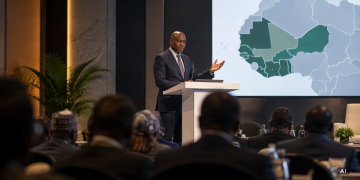
Chief executive Al Cook disclosed the investment after meeting President João Lourenço in Luanda. ‘Angola is now De Beers’ largest active diamond exploration programme worldwide,’ Cook said, according to the Angolan presidency statement. The programme targets commercially viable deposits that could anchor future mine development worth billions of dollars.
De Beers Angola Exploration Programme
| Investor | De Beers |
|---|---|
| Partner | Endiama (state-owned diamond company) |
| Commitment | US$15 million |
| Scope | 16 exploration areas in north-eastern Angola |
| Contract terms | 35 years |
| Status | Prospecting and resource definition, no mine-development decision made |
Source: Angolan presidency statement
No mine-development decision has been made. The current scope covers prospecting and resource definition — the first steps before any capital commitment to processing plants or roads.
Exploration expands across Angola
De Beers returned to Angola in 2022 after a decade-long absence. It signed two mineral investment contracts with state-owned diamond company Endiama. Those contracts cover exploration and potential mining in north-eastern Angola, with terms lasting 35 years.
The scale of the return is notable. Angola produced 15.2 million carats of rough diamonds in 2025, up 8.3% from 2024, according to Kimberley Process Certification Scheme data. The country exported 17.06 million carats valued at approximately US$1.65 billion in the same year, per the same source.
These figures confirm Angola’s standing as a major natural diamond producer. They also show why new discoveries could attract supporting services and additional capital from other explorers.
What does the De Beers commitment mean for investors?
Exploration capital is a leading indicator. It tests geology before companies spend on infrastructure. For investors, US$15M committed by one of the world’s largest diamond miners carries more weight than a production forecast alone.
By FurtherAfrica’s reading of the numbers, De Beers Angola diamonds represent a pipeline option rather than near-term output growth. The next value inflection will come from sampling results, resource definition and economic testing across the 16 prospecting areas.
| Indicator | Figure | Source and period |
|---|---|---|
| De Beers exploration investment | US$15 million | Angolan presidency statement, 2026 |
| Angola rough diamond output | 15.2 million carats | Kimberley Process data, 2025 |
| Angola diamond exports | 17.06 million carats / US$1.65B | Kimberley Process data, 2025 |
Angola’s government gains a credible international explorer for its broader mining strategy. The programme may also improve geological data across prospective areas that remain underexplored.
Angola’s economic ambitions add further context. The government has set a 5.5% growth target in its 2027 budget. A productive mining sector is central to reaching that number. Meanwhile, Botswana’s diamond-led recovery projected 3.8% growth in 2026, adding a regional dimension to the sector’s momentum.
Investors should watch De Beers’ sampling results, any licence extensions across the 16 areas, and the timeline for a potential move from prospecting to mine development.
Quick answers
De Beers has committed US$15 million to diamond prospecting in Angola, covering 16 exploration areas — its largest active diamond exploration programme worldwide as of 2026.
Angola produced 15.2 million carats of rough diamonds in 2025, up 8.3% from 2024, and exported 17.06 million carats valued at approximately US$1.65 billion, according to Kimberley Process data.
De Beers returned to Angola in 2022 after a decade-long absence, signing two mineral investment contracts with state-owned Endiama for exploration and potential mining in north-eastern Angola, with terms lasting 35 years.