Friday, November 13, 2026
FurtherArabiaFurtherAsiaFurtherBrazil
No Result
View All Result
FurtherAfrica
  • Countries
    • Angola
    • Botswana
    • Cape Verde
    • DRC
    • Eswatini
    • Ethiopia
    • Kenya
    • Malawi
    • Mauritius
    • Mozambique
    • Namibia
    • Nigeria
    • Rwanda
    • South Africa
    • Tanzania
    • Uganda
    • Zambia
    • Zimbabwe
  • Interviews
  • Understanding
  • Videos
  • Travel
  • Weekend
  • About
  • EN
  • PT
  • AR
  • IT
No Result
View All Result
FurtherAfrica
No Result
View All Result
Home Development Finance

Ghana BRICS Membership Targets Wider Trade Options

FurtherAfrica by FurtherAfrica
November 10, 2026
in Development Finance, FA, Ghana, Investment, Macroeconomics & Policy, Mining & Resources, Trade & Logistics
Reading Time: 4 mins read
744 56
0
Share via QR codeWhatsappShare on Facebook
Share on X
LinkedInPinteresteMail
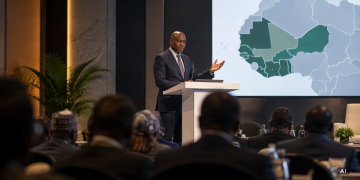
Ghana BRICS membership advanced a step further in late 2026 as Accra sought partner-country status to diversify trade and attract new investment, while keeping its ties with Western institutions intact.

Ghana’s Cabinet approved the BRICS bid on 6 October 2026. Foreign Affairs Minister Samuel Okudzeto Ablakwa announced the decision during a briefing with India’s Foreign Minister Subrahmanyam Jaishankar. The formal application had yet to be submitted at that stage.

President John Dramani Mahama confirmed the approach on 5 November 2026. Ghana would pursue partner status first, with the option of full membership later. Admission requires consensus among existing BRICS members, and no decision timetable has been set.

A broader set of economic options

The government frames BRICS as an additional channel for development finance and industrial cooperation. Ablakwa stated that more than 70 per cent of Ghana’s exports go to BRICS countries, per RFI reporting from October 2026. He also noted Ghana’s heavy reliance on Chinese imports for a wide range of goods.

However, the government has been explicit: existing relationships with the International Monetary Fund and the World Bank remain intact. The BRICS bid is designed to add options rather than replace them.

That calculation reflects Ghana’s search for policy space after a bruising run of economic shocks. Officials want greater control over natural resources and more local value-added processing. BRICS membership could open access to larger markets and industrial suppliers, with alternative capital from China and India among the draws. Brazil is a secondary consideration.

A staged entry through partner status also limits diplomatic risk. Accra gains an entry point while preserving flexibility to seek deeper integration later.

IssuePosition
Proposed statusPartner country (November 2026 reports)
Admission requirementConsensus among existing BRICS members; no timetable set
Export exposureOver 70% of exports to BRICS countries, per Ablakwa/RFI, October 2026

What does Ghana BRICS membership mean for investors?

Analysts place execution at the centre of the debate. Elvis Banoemuleng Botah, an international relations analyst and development consultant, argued that Ghana must enter BRICS with a clear industrial strategy. Without one, the initiative risks becoming a diplomatic exercise with limited economic returns.

Richmond Akwasi Atuahene, a financial analyst based in Accra, described BRICS membership as no substitute for resolving Ghana’s structural and macroeconomic challenges. The two assessments point to the same conclusion: diplomatic access alone does not build factories, expand exports or create jobs.

By FurtherAfrica’s reading of the numbers, the strongest case for the bid rests on commercial alignment. Ghana’s export geography already maps closely onto BRICS markets. The question is whether Accra can convert that trade relationship into higher-value flows, moving from raw commodities toward processed and manufactured goods.

Ghana’s macroeconomic position has steadied in recent months, giving policymakers slightly more room to pursue structural reforms alongside the application. That stability matters. BRICS ties will create durable value only when diplomatic access is paired with improvements in power supply, logistics, credit access and industrial skills.

Investors should watch the formal application date and the response from BRICS members. The shape of Ghana’s accompanying industrial programme will be equally telling.

Quick answers
What BRICS status is Ghana seeking?

Ghana is pursuing partner-country status as a first step, with the possibility of full BRICS membership at a later stage. President John Dramani Mahama confirmed this approach on 5 November 2026.

How much of Ghana’s trade is with BRICS countries?

Foreign Affairs Minister Samuel Okudzeto Ablakwa stated that more than 70 per cent of Ghana’s exports go to BRICS member countries, according to RFI reporting from October 2026.
Related

Tags: BricsGhanaIMFJohn Dramani Mahamapartner-country statusSamuel Okudzeto AblakwaWorld Bank
ScanSendShare320
Tweet200
Share56Pin72Send
FurtherAfrica

FurtherAfrica

Founded in 2015 FurtherAfrica is an online platform centralising news and content focusing on the development and growth story of the African continent.

Related Posts

Climate Finance

Mozambique climate resilience needs US$37.2B in a decade

by FurtherAfrica
November 13, 2026
Capital Markets

Nigeria’s West African bond market plan spans 10 nations

by FurtherAfrica
November 12, 2026
Trade & Logistics

Private jet vs first class on African multi-stop routes

by FurtherAfrica
November 12, 2026
Digital & Technology

Angola cybercrime cooperation tops CPLP agenda

by FurtherAfrica
November 12, 2026
Digital & Technology

Ghana Girls-in-ICT training reaches Savannah Region

by FurtherAfrica
November 12, 2026
FurtherAsia

Read the Latest

Climate Finance

Mozambique climate resilience needs US$37.2B in a decade

by FurtherAfrica
November 13, 2026
0

Mozambique climate resilience requires US$37.2B over ten years, President Chapo said at COP31 — here is what investors must watch.

Read moreDetails

Nigeria’s West African bond market plan spans 10 nations

November 12, 2026

Private jet vs first class on African multi-stop routes

November 12, 2026

Angola cybercrime cooperation tops CPLP agenda

November 12, 2026

Ghana Girls-in-ICT training reaches Savannah Region

November 12, 2026

FurtherAfrica Partners Network

The ExchangeFarmers Review Africa360 Mozambique
TechGist AfricaEnergy Capital & PowerClub of Mozambique
Taarifa RwandaWeb3AfricaSee Africa Today
Africa Global FundsNovafricaCrudeMix Africa
Harambee AfricaBotswana unpluggedFinancial Insights Zambia
O EconómicoDigilogic Africa 
FurtherAfrica

© 2021 FurtherMarkets

FurtherAfrica is a FurtherMarkets platform

  • Countries
  • Interviews
  • Understanding
  • Videos
  • Travel
  • Weekend
  • About
  • EN
  • PT
  • AR
  • IT

Follow Us

Welcome Back!

Login to your account below

Forgotten Password?

Retrieve your password

Please enter your username or email address to reset your password.

Log In
No Result
View All Result
  • Countries
    • Angola
    • Botswana
    • Cape Verde
    • DRC
    • Eswatini
    • Ethiopia
    • Kenya
    • Malawi
    • Mauritius
    • Mozambique
    • Namibia
    • Nigeria
    • Rwanda
    • South Africa
    • Tanzania
    • Uganda
    • Zambia
    • Zimbabwe
  • Interviews
  • Understanding
  • Videos
  • Travel
  • Weekend
  • About
  • EN
  • PT
  • AR
  • IT

© 2021 FurtherMarkets

This website uses cookies. By continuing to use this website you are giving consent to cookies being used. Visit our Privacy and Cookie Policy.