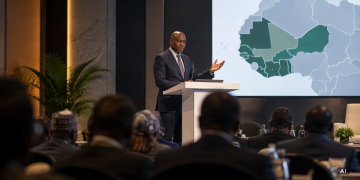
The COP31 World Leaders Climate Action Summit opened on 11 November 2026 in Antalya, Türkiye. Speakers placed implementation at the centre of every debate. Promises, they said, must become projects.
That message carries real weight for investors. Clear delivery improves project pipelines and reduces policy risk. It also strengthens the case for private capital in developing markets.
Tanzania puts a number on its climate ambition
The Tanzanian government has set a financing target of TSh7.3 trillion for environmental conservation and climate programmes, per government statements from October–November 2026. The funding would support initiatives aligned with Development Vision 2050.
A defined target changes the conversation. It moves discussions from broad commitments towards named project pipelines, identified sponsors and agreed monitoring frameworks. Before committing capital, investors will assess how well projects are prepared and how consistently results are reported, alongside the reliability of the regulatory environment.
By FurtherAfrica’s reading of the numbers, Tanzania’s agenda combines national financing needs with wider multilateral negotiations on adaptation and mitigation. That combination positions the country to attract development lenders where projects show credible, measurable outcomes.
Credible climate finance starts when promises become investable projects.
What does Tanzania’s COP31 position mean for investors?
COP31 runs from 9 to 20 November 2026 in Antalya, under the UNFCCC framework. Tanzania has engaged actively in negotiations on the New Collective Quantified Goal (NCQG) on climate finance, which targets mobilising US$300 billion annually for developing countries by 2035, per NCQG documentation.
Tanzania’s stated position calls for finance that is adequate, predictable and accessible to recipient countries. Adaptation, mitigation, technology transfer and capacity building all feature in its national position.
These demands point directly towards blended finance structures. Grants and concessional loans absorb early-stage risk. Commercial lenders then fund established assets. Technology partnerships can support energy, transport and waste resilience projects.
Meanwhile, Tanzania has highlighted carbon markets under Article 6 of the Paris Agreement. It calls for fair pricing, benefit sharing and strong environmental integrity standards. That focus opens investment pathways in renewable energy, transport and waste management — though carbon revenues will depend on credible accounting and predictable rules.
Blended finance and the path to capital
Recent Adaptation Fund support for Africa’s climate resilience shows concessional capital is already moving towards the continent. Tanzania’s defined financing target positions it to attract similar flows, provided project preparation keeps pace.
| Indicator | Figure | Source / Period |
|---|---|---|
| Tanzania climate funding target | TSh7.3 trillion | Tanzanian government, Oct–Nov 2026 |
| Global climate finance goal (annual) | US$300 billion | NCQG, target year 2035 |
| COP31 conference dates | 9–20 November 2026 | UNFCCC, Antalya, Türkiye |
Investors should track Tanzania’s project pipeline, financing terms and monitoring systems as COP31 moves towards its close on 20 November 2026.
Quick answers
Tanzania has set a national climate financing target of TSh7.3 trillion for environmental conservation and climate programmes, aligned with its Development Vision 2050.
The New Collective Quantified Goal (NCQG) targets US$300 billion in annual climate finance flows to developing countries by 2035, per UNFCCC documentation.