The shift opens a wider investment set, covering refining, power and downstream manufacturing, and signals a structural change in how Namibia positions itself within global supply chains.
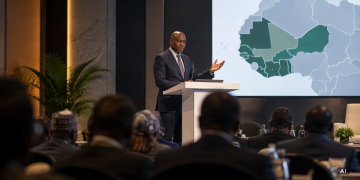
President Nandi-Ndaitwah told investors that mineral projects must include processing facilities in Namibia. She called for partnerships with Namibian businesses and confirmed the government is encoding that principle in law.
Processing becomes an investment condition
Namibia produces uranium and holds deposits of lithium, rare earths and copper. Graphite is also present. Those resources place it firmly within supply chains serving electric vehicles and renewable power, as well as advanced manufacturing.
Domestic processing demands more than ore supply. Projects need reliable electricity, water, transport links, engineering services and specialist skills.
In 2023, Namibia restricted exports of unprocessed lithium and certain other critical minerals as part of a domestic value-addition policy. The government has also proposed mechanisms to raise Namibian ownership in new mining ventures, drawing comment from the Chamber of Mines of Namibia, which notes that processing economics depend heavily on energy costs, water prices, logistics and global commodity prices.
That distinction matters for capital allocation. Investors need clarity on ownership thresholds, export rules, permitting timelines and processing obligations before committing funds to large projects.
What does Namibia’s processing policy mean for investors?
For mining companies, the policy raises the value of integrated development plans. A project may now need to link extraction with concentration, refining or manufacturing to secure approvals.
That creates demand across adjacent sectors. Engineering firms could supply processing equipment. Utilities and independent power producers could serve new industrial energy loads. This connects directly to NamPower’s target to source 70% of its electricity from renewables by 2030, a target that would underpin the energy-intensive processing sector.
Ports, rail links, storage and specialist logistics may also benefit from higher domestic throughput. Local manufacturers could supply components and services to mines and processing plants.
By FurtherAfrica’s reading of the numbers, Namibia’s policy is moving investment discussions from mine development towards full value-chain planning. Namibia is selling a position in the supply chain, not simply its minerals.
| Resource | Domestic opportunity |
|---|---|
| Uranium | Processing and supply-chain services |
| Lithium | Concentration and refining |
| Rare earths | Separation and advanced materials |
| Copper and graphite | Processing, logistics and manufacturing |
Strategic partnerships signal wider ambitions
Namibia Critical Metals is advancing the Lofdal Heavy Rare Earth Project in partnership with Japan’s JOGMEC and Toyota Tsusho. JOGMEC and Toyota Tsusho met a C$23 million expenditure requirement to earn a 50% interest in Lofdal, with the transfer subject to shareholder and regulatory approvals as of 2026.
Lofdal Heavy Rare Earth Project
| Project | Lofdal Heavy Rare Earth Project |
|---|---|
| Lead | Namibia Critical Metals |
| Partners | Japan’s JOGMEC and Toyota Tsusho |
| Stake earned | 50% interest |
| Expenditure requirement | C$23 million |
| Status | Transfer subject to shareholder and regulatory approvals as of 2026 |
Source: FurtherAfrica
Lofdal is one of the few known undeveloped sources of dysprosium, terbium and yttrium, rare earths used in electric vehicles, renewable-energy technologies and advanced defence applications.
That example illustrates why processing policy can attract strategic capital. Partners may seek secure supply, technology cooperation and local industrial capacity simultaneously. Domestic facilities can also reduce exposure to export bottlenecks and retain more revenue within Namibia.
Investors should watch the proposed processing legislation, implementation rules and the next wave of project commitments. Those signals will determine whether Namibia critical minerals become a simple export story or the foundation of a deeper industrial chain.
Quick answers
Namibia now requires foreign investors to include processing and refining facilities inside the country as a condition of mineral project approvals. The government restricted exports of unprocessed lithium and certain other minerals in 2023 as part of this domestic value-addition drive.
The Lofdal Heavy Rare Earth Project holds dysprosium, terbium and yttrium — rare earths critical for electric vehicles, renewable-energy systems and advanced defence technologies. JOGMEC and Toyota Tsusho met a C$23 million expenditure threshold to earn a 50% interest in the project.
Beyond mining, the policy opens demand across power generation, engineering, logistics, ports and local manufacturing. NamPower’s target to source 70% of electricity from renewables by 2030 is designed to support the energy-intensive processing sector.