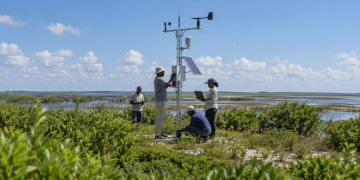
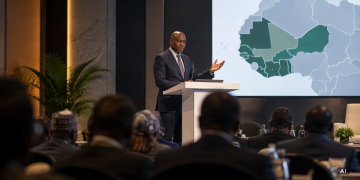
Presented at Africa Energy Week 2026, the project update confirmed that work across the Afungi Peninsula is advancing on multiple simultaneous fronts. The onshore LNG complex — comprising two trains with a combined nameplate capacity of 13.12 million tonnes per annum (MTPA), LNG storage tanks, and a Material Offloading Facility (MOF) with export jetty — sits at roughly 50% completion.
Offshore, the Golfinho-Atum subsea and drilling programme has reached the same milestone, with marine logistics and installation sequencing actively under execution since offshore activities formally restarted in January 2026.
More than 10,000 workers are currently on site at Afungi, of whom more than 8,000 are Mozambican nationals. Material and equipment deliveries exceed 80,000 tonnes per month, with more than ten barges offloading at Afungi each week as of October 2026.
What does Mozambique LNG 2026 mean for the country’s economy?
The economic case for Mozambique is substantial. The initial development project carries a total cost of US$20B, making it one of the largest industrial investments ever recorded on the African continent. Spending with Mozambican-registered companies during construction stands at US$4.5B. Tax revenue to the Mozambican state is projected around US$800M during the construction phase alone, with cumulative government and ENH (the national hydrocarbon company) cash flows estimated at US$40B to US$100B across 25 years of production — a range that reflects oil-price variability, (as noted in the presentation).
Community investment and local content
Beyond the headline capital numbers, the Mozambique LNG Foundation has committed US$200M to human-capital development in Cabo Delgado, covering healthcare, clean water, and education. The project has supported 8,500 jobs in surrounding communities through socio-economic development programmes, with 5,000 farmers enrolled in an agricultural development programme and 2,000 fishermen receiving targeted support.
TotalEnergies operates Offshore Area 1 with a 26.5% stake. Co-investors include Mitsui & Co (20%), Indian companies holding a combined 30% through OVL — the overseas arm of ONGC (16%), Bharat Petroleum Corporation (10%), and Oil India Limited (4%) — as well as ENH (15%) and PTT Exploration and Production (8.5%).
Quick answers
Both the onshore Afungi LNG complex and the offshore Golfinho-Atum subsea development have reached approximately 50% overall construction progress as of October 2026, with more than 10,000 workers on site.
The Mozambican state is projected to receive US$800M in tax revenue during construction and between US$40B and US$100B in cumulative government and ENH cash flows over 25 years of production, depending on oil price.
TotalEnergies operates the project with a 26.5% stake; co-investors are Mitsui & Co (20%), OVL/ONGC (16%), Mozambique’s ENH (15%), Bharat Petroleum (10%), PTTEP (8.5%), and Oil India Limited (4%).